This riser recliner chair guide explains how changes in mobility can make everyday activities such as sitting down or standing up increasingly challenging.
Joint stiffness, reduced strength, long-term health conditions, or recovery following illness or surgery can all affect confidence and comfort at home. A riser recliner chair is designed to provide supportive seating while gently assisting you into a safe standing position.
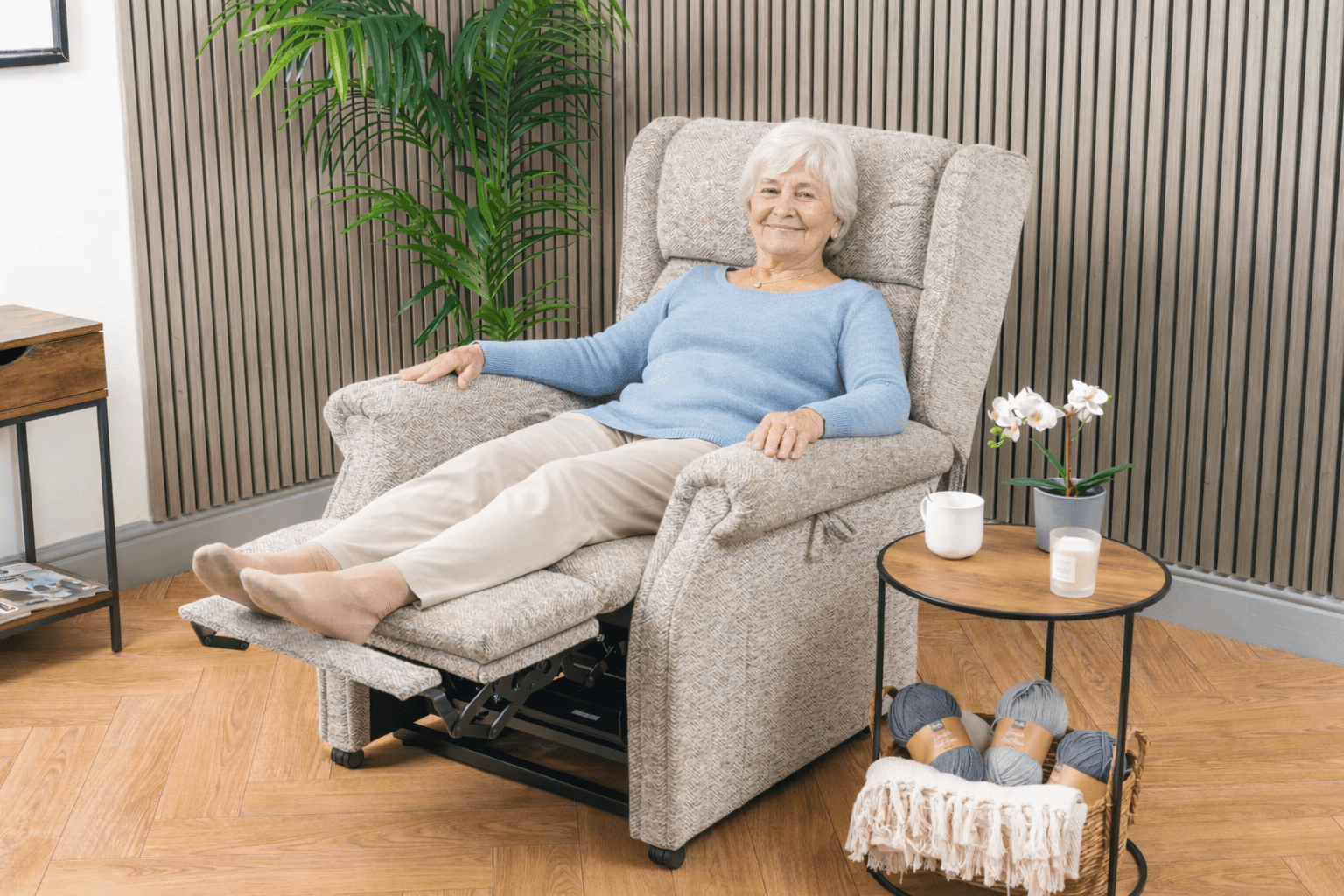
A riser recliner chair is a powered armchair that uses a smooth lifting mechanism to tilt the seat forward, helping the user move safely and comfortably from sitting to standing. Using a simple handset control, the chair can also recline into a range of relaxing positions, including elevated leg support to improve overall comfort. Modern riser recliners combine practical mobility assistance with supportive cushioning and attractive upholstery options, allowing them to blend naturally into your living space. If you would like to understand more about how lift and recline systems operate, you may find our guide to riser recliner chair mechanisms helpful.
Riser recliner chairs can support a wide range of comfort and mobility needs, including:
They can also provide reassurance for family members and carers by promoting safer, more controlled movement within the home.
One of the most important decisions when choosing a riser recliner chair is selecting the most appropriate motor configuration. Single motor chairs move the backrest and footrest together in one smooth action and are often a simple and effective solution for general relaxation and assisted standing. Dual motor chairs allow independent adjustment of the backrest and footrest, providing greater flexibility for posture support, pressure relief, and personalised comfort. Your mobility level, daily routine, and preferred sitting or resting positions will all influence which option is most suitable. For a more detailed comparison, you can read our guide on single motor vs dual motor riser recliner chairs.
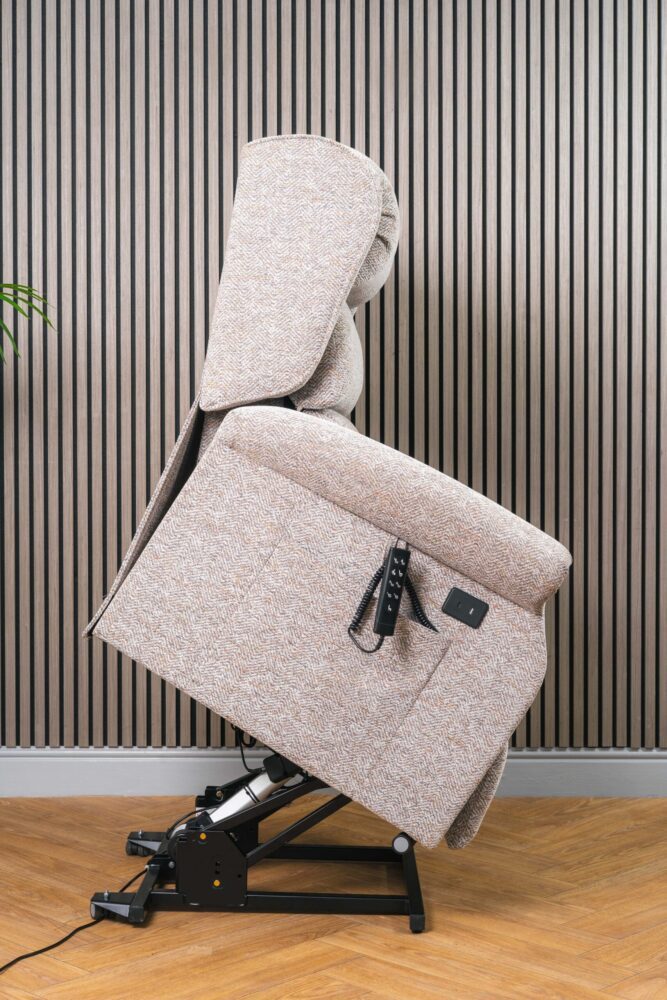
Lift assist positioning helps reduce strain when moving from sitting to standing.
The timescale in which you need supportive seating can play an important role in determining the most suitable model. Some people plan ahead to improve comfort and independence, while others may require a chair more urgently following a hospital stay or sudden change in mobility. In these situations, an express delivery range can provide a practical and reassuring solution. These chairs are typically available in carefully selected sizes, fabrics, and motor options that allow for faster dispatch while still offering reliable comfort and support. Timely access to appropriate seating may help reduce physical strain, support recovery, and lower the risk of falls at home or within care environments. Where time allows, made-to-order chairs can offer greater flexibility in sizing, specialist upholstery choices, and advanced positioning features. Understanding both your immediate and longer-term needs can help you choose seating that provides the right balance between availability and personalised support. If you need supportive seating quickly, you can explore our express riser recliner chair range.
Choosing the right chair involves more than selecting a colour or fabric. Important practical considerations include: Correct seat dimensions Seat height, width, and depth all influence posture, comfort, and how easily you can stand safely. Supportive cushioning and pressure care options Specialist foam or pressure-redistributing cushioning can help improve comfort during extended periods of sitting. Practical upholstery choices Wipe-clean finishes or specialist stretch fabrics may be beneficial where easier maintenance or enhanced pressure care support is required. Ease of handset controls Simple, clearly designed controls can make operation easier for users with reduced dexterity. Home environment and available space Room layout and positioning should be considered before choosing a chair. Where space is limited, a wall-hugger mechanism can be a practical solution, typically requiring only minimal clearance from the wall to achieve a full recline position. Taking time to assess these features carefully can help ensure your chair provides reliable long-term comfort and support.
Pressure relief is an important consideration for anyone who spends prolonged periods seated or has reduced mobility. Continuous pressure on certain areas of the body can lead to discomfort, skin irritation, or the development of pressure-related tissue damage over time. Chairs designed with pressure-redistributing cushioning, supportive posture positioning, and carefully contoured seating surfaces can help promote safer and more comfortable sitting throughout the day.
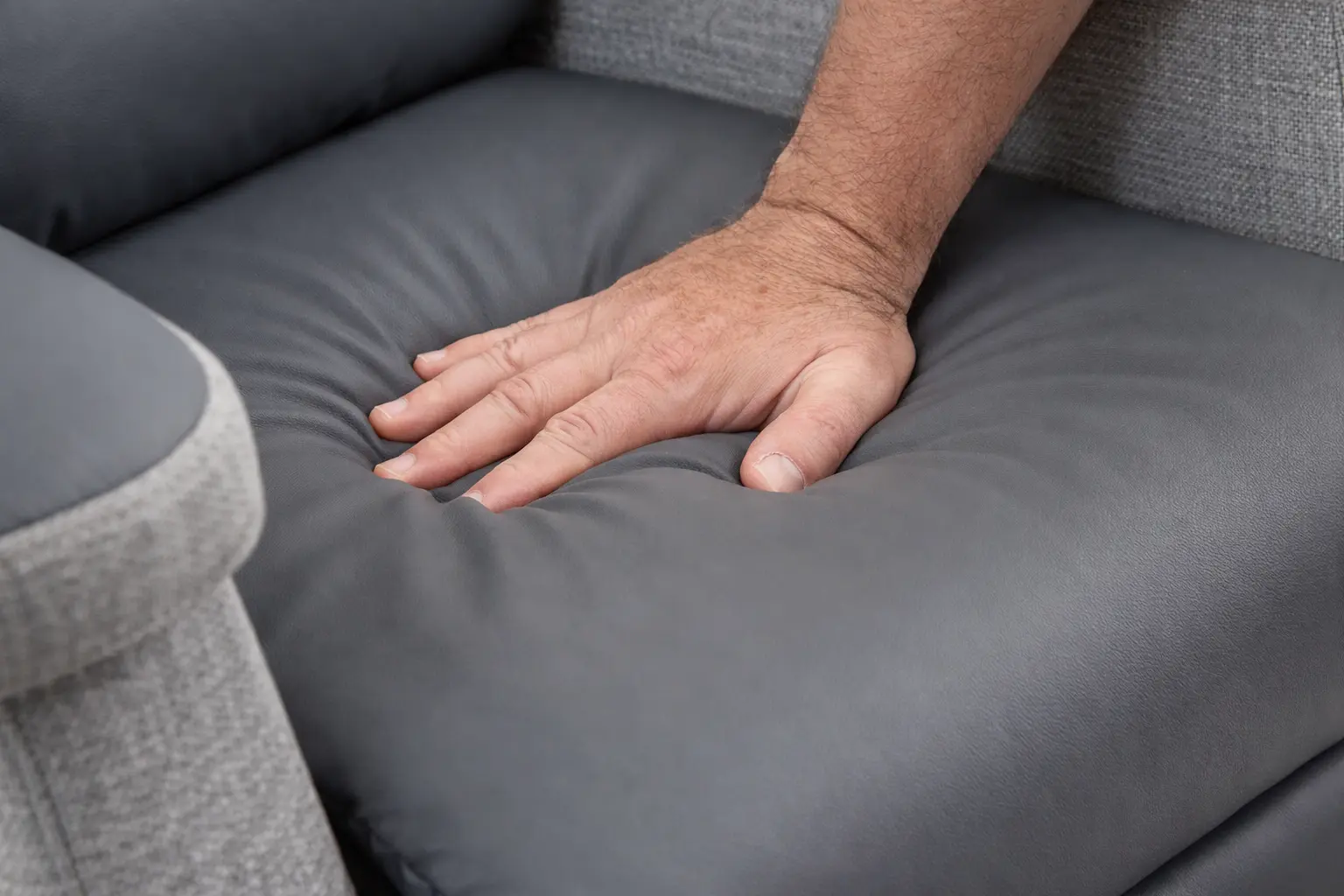
Supportive cushioning designed to redistribute pressure can help improve comfort during longer periods of sitting.
The upholstery covering the chair also plays a key role in effective pressure management. 4-way stretch fabrics are widely regarded as an optimum material for pressure-relieving seating, as they move and flex naturally with the user’s body. This helps to minimise friction and shear forces on the skin while maintaining a supportive and stable seating surface. Considering pressure care requirements early can help ensure your seating continues to meet changing comfort or mobility needs over time.
A well-chosen riser recliner chair can contribute positively to everyday wellbeing by:
These benefits often encourage people to begin exploring supportive seating options earlier, rather than waiting until mobility becomes more restricted.
Understanding how supportive seating should fit your body can help reduce the risk of discomfort or needing to replace equipment sooner than expected.
Selecting the correct size riser recliner chair is essential for achieving proper posture support, safe standing assistance, and long-term comfort. Measurements such as seat height, seat depth, seat width, and backrest support all influence how easily you can sit down, stand up, and remain comfortable during longer periods of use. We can offer guidance to help you understand which sizes, mechanisms, and comfort features may be most appropriate. For customers living in the South Wales region, seating assessments may also be available on request where more detailed support is required. If you are unsure how to measure correctly, our guide on how to measure for a riser recliner chair explains what to check before making a decision. In some cases, standard seating dimensions may not provide the level of support or space required for long-term comfort.
Bariatric riser recliner chairs provide enhanced support, durability, and comfort for individuals who require higher weight capacities or more generous seat dimensions. These models typically feature reinforced frames, wider seating areas, and specialist cushioning systems to help promote safe and comfortable everyday use.
Choosing appropriately sized supportive seating is important not only for comfort but also for posture, pressure management, and ease of standing. Bariatric chairs can help reduce strain on joints and provide greater stability, particularly where standard seating dimensions may feel restrictive.
If you are unsure whether a bariatric riser recliner chair may be more suitable, exploring available options or seeking guidance can help ensure you select seating that provides the right level of support for your needs. For a broader overview of bariatric seating, beds and support equipment, you may find our bariatric equipment and care guide helpful.
You can browse our bariatric riser recliner chair range to compare supportive models designed for enhanced strength and comfort.
A riser recliner chair is often one of the first practical steps towards creating a safer and more comfortable living environment. When chosen carefully, it can help maintain independence, reduce reliance on others, and support everyday wellbeing. If you are beginning to compare options, you can browse our full range of riser recliner chairs to explore available sizes, motor configurations, and upholstery choices. Taking time to understand your seating needs can make choosing the right riser recliner feel more straightforward and reassuring.
This riser recliner chair guide aims to answer common questions and help you feel more confident when choosing supportive seating.
The correct chair size depends on your height, leg length, and how you prefer to sit. Seat height, seat depth, and back support all play an important role in ensuring safe standing assistance and long-term comfort. Taking accurate measurements before choosing a chair can help reduce the risk of discomfort or poor posture.
Single motor chairs offer simple, coordinated movement of the backrest and footrest, while dual motor chairs allow independent adjustment for more personalised comfort and pressure relief. The most suitable option will depend on your mobility needs, daily routine, and preferred sitting positions.
A properly fitted riser recliner chair can support safer standing by gently assisting you into an upright position. This can help reduce strain on joints and improve confidence when getting up from a seated position, particularly for those with reduced strength or balance.
Delivery times vary depending on whether you choose a made-to-order model or an express delivery chair. Express riser recliners are typically available in selected sizes and fabrics for faster dispatch, which can be helpful following hospital discharge or sudden changes in mobility.
Many riser recliner chairs can be specified with pressure-relieving cushioning and specialist upholstery such as 4-way stretch fabrics. These features can help improve comfort during longer periods of sitting and support better skin protection where pressure care is a consideration.
If you are ready to begin comparing supportive seating solutions, you can browse our full range of riser recliner chairs to explore available sizes, motor configurations, pressure care features and upholstery options. Taking time to review suitable models can help you feel confident in choosing seating that supports both comfort and long-term independence at home.
