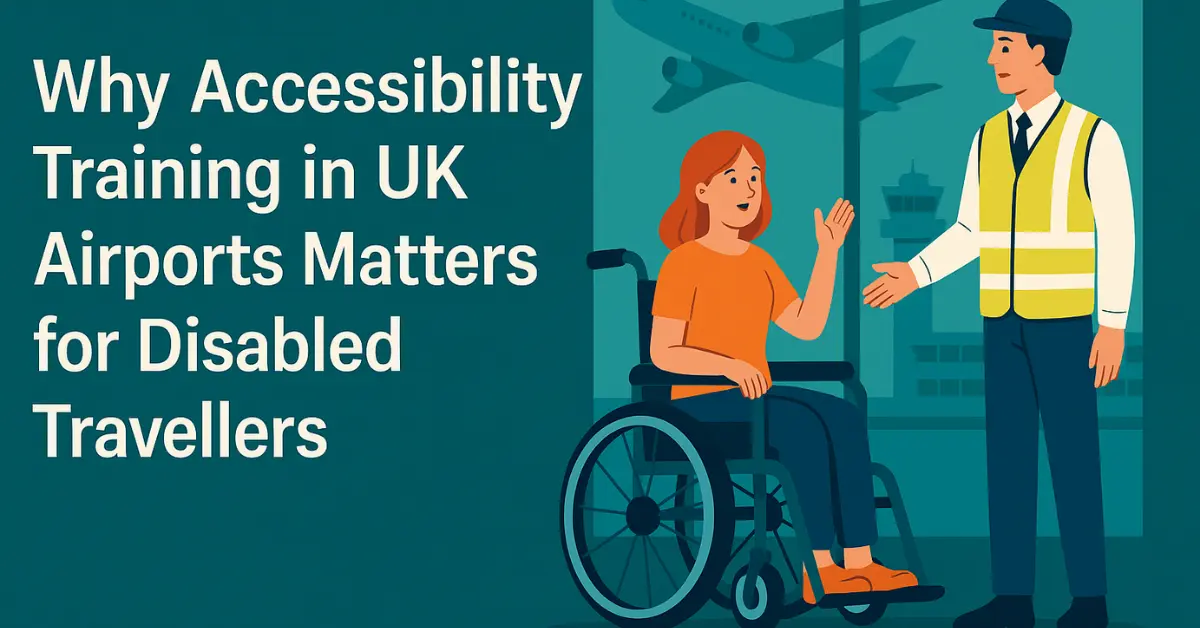
Accessibility training in airports is essential for creating an inclusive travel experience for all passengers. With UK airports handling millions of travellers each year, staff need the right skills and knowledge to support passengers with disabilities, mobility challenges, or sensory needs. Effective training ensures that airport personnel can provide safe, efficient, and respectful assistance, improving passenger satisfaction and compliance with accessibility regulations. Investing in accessibility training not only benefits travellers but also enhances the airport’s reputation and operational efficiency.
In July 2025, a government-backed taskforce led by Paralympian Baroness Tanni Grey-Thompson called for mandatory disability and accessibility training for all airline and airport staff (The Guardian).
This comes after years of complaints from disabled passengers about poor treatment, mishandling of mobility aids, and inadequate support at airports. Wheelchairs and scooters are often damaged during transit, and many travellers report being left stranded without assistance.
Flying can be daunting for anyone, but for passengers with mobility needs, the challenges multiply:
Mandatory accessibility training would help ensure that all staff understand the importance of mobility aids and the dignity of disabled travellers. This means:
While staff training is essential, travellers can also prepare with specialist mobility equipment designed for travel:
👉 Explore our full range of lightweight wheelchairs and folding mobility scooters to make air travel easier.
The taskforce’s recommendations are a positive step toward inclusive air travel, but real change will depend on implementation. Airlines and airports will need to commit resources and training time to make the vision a reality.
For disabled passengers, the hope is simple: to travel safely, confidently, and with dignity—without worrying whether their mobility aid will be damaged or if assistance will be available.
At HWB Mobility, we believe accessible travel is a right, not a privilege. By combining better staff training with reliable, travel-friendly mobility equipment, the future of air travel for disabled passengers can finally become smoother and more inclusive.
